
Your first appointment is a structured investigation, not simply a request for an inhaler. You will describe the pattern of your symptoms, undergo an examination, review any previous results and learn whether further testing is needed. By the end, you should know what to bring, what the doctor is assessing and what happens before a long-term treatment plan is confirmed.
Key takeaways
- Bring every inhaler, medicine, report and previous prescription.
- Expect questions about symptoms, triggers, night waking and reliever use.
- The doctor may check oxygen levels, breathing sounds and perform spirometry.
- Leave with a working diagnosis, treatment plan and follow-up instructions.
What happens from registration to the symptom history?
Registration usually confirms your contact details, reason for the visit, allergies, current medicines and previous records. Bring inhalers, tablets, spirometry or chest X-ray reports, allergy-test results and any earlier prescriptions so the doctor can compare what has already been tried.
The first asthma consultation then moves to your symptom history. The doctor will ask when wheezing, breathlessness, chest tightness or cough began, how quickly symptoms start and stop, and whether they vary from day to day. A cough alone gives less evidence for asthma than symptoms that change with triggers.
- Whether symptoms cause night waking or are worse on waking
- Whether exercise causes symptoms or exercise limitation, and how long recovery takes
- Whether colds, pollen, dust, pets, smoke, cold air or seasonal changes trigger symptoms
- How often attacks occur, how long they last, their worst point and how much a reliever inhaler helps
- Whether you smoke, vape or inhale second-hand smoke, and whether asthma, allergies or eczema runs in your family
- Whether symptoms worsen during a particular job, task or shift and improve on weekends or holidays
- Any emergency-department visits, hospital admissions, oral steroid courses or missed work and school
Work-related patterns matter. Tell the doctor about dusts, fumes, chemicals, flour, cleaning products and protective equipment; the clinician may later compare peak-flow readings at work and away from work. The doctor will also ask about recent symptom control, reliever use and activity limits, which differs from asthma severity.
What will the doctor check during the examination and lung tests?
The doctor checks your breathing, oxygen saturation and chest, then uses lung-function testing to see whether airflow changes in a pattern consistent with asthma. A normal examination or oxygen saturation does not rule it out because symptoms and airway narrowing can disappear between episodes.
- Physical examination: The clinician measures breathing rate, watches for chest-muscle effort, listens for wheeze or reduced air entry, and examines your nose and throat for allergic inflammation or post-nasal drainage. A heart examination can help identify cardiac causes of breathlessness.
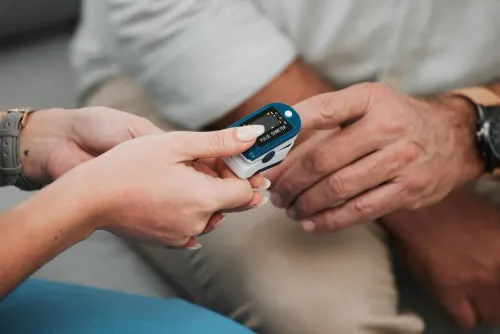
- Oxygen saturation: A pulse oximeter clips to your finger and estimates blood oxygen. A normal reading is reassuring but does not prove that asthma is absent.
- Spirometry: You breathe forcefully into a device that records FEV1, FVC and the FEV1/FVC ratio. The test is usually repeated after an inhaled bronchodilator.
- Bronchodilator reversibility: An increase in FEV1 or FVC of more than 12% and more than 200 mL in an adult supports variable airflow obstruction. A smaller change does not settle the diagnosis.
- Peak-flow monitoring: If spirometry is normal, the doctor may ask you to record peak expiratory flow in the morning and evening for several weeks. Recordings at work and away from work help assess occupational asthma.
If results do not fit asthma, the clinician may investigate inducible laryngeal obstruction, chronic obstructive pulmonary disease, reflux, upper-airway disease or heart problems.
Which medicines and inhaler habits will be reviewed?
A clinician determines whether treatment works by checking both your results and how you take the medicine. They will review the exact device, strength, prescribed dose, missed doses, refill gaps, prescription drugs, over-the-counter products, supplements, recent steroid bursts and urgent-care visits.
You may be asked to demonstrate your inhaler technique. For a pressurised metered-dose inhaler, the clinician watches whether you shake it, breathe out first, seal your lips, start a slow breath as you press, and hold that breath for about 10 seconds. A spacer can improve delivery.
Dry-powder inhalers require a quick, deep inhalation, so using the wrong breathing pattern can make effective medicine appear to fail.
| Treatment role | What the clinician reviews | Sign the plan needs attention |
|---|---|---|
| Reliever inhaler | How often you use it and whether it provides prompt relief | Frequent use, night symptoms or short-lived relief |
| Controller inhaler | Daily use, missed doses, device fit and refill access | Symptoms continue because doses are skipped or delivery is poor |
| Inhaled corticosteroid | Whether it is included and taken consistently | SABA-only treatment leaves airway inflammation untreated |
The clinician separates asthma control from severity. Control reflects recent symptoms, night waking, activity limits and reliever use; severity reflects the treatment intensity needed to maintain control. You should leave with a written asthma action plan covering daily doses, worsening symptoms, permitted adjustments and urgent-care warning signs.
How does the doctor decide whether it is asthma and what to treat first?
A first visit can show that asthma is plausible without proving it. The doctor looks for both a characteristic pattern of wheeze, breathlessness, chest tightness or cough and objective evidence of variable expiratory airflow limitation; normal spirometry on one day does not exclude asthma.
If suspicion remains, the next step may include:
- Repeat spirometry when symptoms are present, especially if the first result was normal.
- Peak-flow monitoring twice daily for about two weeks. Changes at work, on weekends and during holidays can reveal occupational asthma.
- Bronchial challenge testing if routine lung tests remain inconclusive.
- FeNO or blood eosinophil testing to assess type-2 airway inflammation. FeNO above 50 parts per billion in adults or 35 parts per billion in children supports eosinophilic inflammation, but a low result does not rule out asthma.
- Allergy tests to identify triggers such as dust mites, pollen, mould or animal dander. A positive result identifies sensitisation; it does not prove that asthma causes your symptoms.
The doctor also checks whether inhaled corticosteroids have already reduced symptoms, because treatment can make variable airflow limitation harder to demonstrate. Do not stop prescribed medicine without advice.
Treatment is prioritised by immediate risk and current control. Severe breathing difficulty, low oxygen or repeated reliever use takes priority over completing every diagnostic test.
If you are stable, the clinician may provide a written action plan, arrange follow-up to review symptoms, lung function and inhaler technique, and then adjust long-term treatment when the evidence is clearer.
What should you bring, and what will you leave with?
Bring the information that lets the doctor separate a new pattern from a treatment problem. Carry every current inhaler and tablet, previous prescriptions, chest X-rays, spirometry reports, allergy-test results and a written list of suspected triggers.
- Record how often symptoms occur, including night waking, exercise limitation, reliever use, attacks, emergency visits and the response to each reliever dose.
- Note whether breathing improves away from work, such as on weekends or holidays, or worsens during a particular task or shift. This clue can lead to serial peak-flow readings at work and away from work.
- Write down smoking or vaping exposure, seasonal changes, family history and medicines that caused side effects.
- Ask what each medicine does, when to take it, how many puffs to use and what to do after a missed dose.
You should leave with a clear written asthma action plan, not only a prescription. It should name your daily treatment, warning signs of worsening control, permitted treatment changes and the symptoms that require urgent care. Keep it where family members can find it.
Before leaving Swasthya Clinic Holistic Healing, confirm whether testing has established asthma or only made it plausible, and ask which result would change the diagnosis. Book the follow-up before you go; it gives the clinician a chance to reassess symptoms, lung function, adherence and inhaler technique before increasing medication.
Related services
Asthma Treatment & Management in Ravet, Pune Asthma Treatment & Management in Ravet, Pune Asthma is a chronic respiratory condition that causes inflammation and narrowing of the airways, leading to symptoms such as wheezing, coughing,... View service → |
Chest & Respiratory Care Our doctor provides comprehensive diagnosis and treatment for a wide range of chest and respiratory conditions. View service → |
Frequently asked questions
What happens during registration and the asthma symptom history?
Registration confirms your contact details, reason for visiting, allergies, current medicines and previous records. The doctor then asks about wheezing, cough, breathlessness, triggers, night waking, activity limits, attacks and reliever use.
What will the doctor check during the examination and lung tests?
The doctor may measure your oxygen saturation, pulse and breathing rate, listen to your chest and assess your breathing effort. Lung testing can include spirometry, which measures airflow before and after a bronchodilator.
Which medicines and inhaler habits will be reviewed?
Bring all inhalers, tablets and prescriptions. The doctor reviews medicine names, doses, frequency, side effects, missed doses, spacer use, inhaler technique and how often you need a reliever inhaler.
How does the doctor decide whether it is asthma and what to treat first?
The doctor combines your symptom pattern, examination and lung-test results with other possible causes, such as allergies, infection or reflux. Treatment priorities depend on current severity, flare-up risk, triggers and how well symptoms are controlled.
What should you bring, and what will you leave with?
Bring inhalers, tablets, spirometry or chest X-ray reports, allergy-test results and earlier prescriptions. You should leave with a documented assessment, medicine instructions, inhaler-use guidance, warning signs and a follow-up plan.
Keywords