
Walking and stair climbing place substantial demands on the knee and hip joints. When either activity repeatedly causes pain, stiffness, weakness, or instability, determining which joint is responsible becomes important.
A Knee and Hip Specialist can assess whether symptoms arise from arthritis, injury, muscle weakness, joint mechanics, or another condition.
Pain Location Provides Useful Clues
Knee problems may produce pain at the front, sides, back, or deeper within the joint.
Hip problems can be less obvious. Some patients experience groin pain, while others notice discomfort around the outer hip, buttock, or even thigh.
Occasionally, hip conditions can contribute to pain perceived closer to the knee.
This is one reason a proper examination is more reliable than self-diagnosis based on pain location alone.
Stair Pain Can Have Different Causes
Pain while going upstairs may involve different mechanical demands from pain while descending.
The doctor may ask whether symptoms occur:
- While climbing
- While descending
- After prolonged sitting
- During the first few steps after rest
- After long walks
- During squatting
- While turning
- At night
These patterns help narrow possible causes.
Examination Looks Beyond the Painful Area
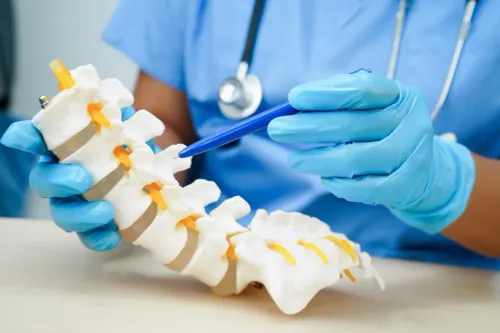
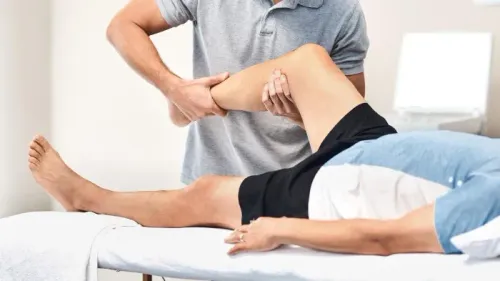
A useful musculoskeletal assessment may include joint movement, tenderness, swelling, alignment, muscle strength, gait, stability, and the movement of surrounding joints.
For example, weakness around the hip can influence lower-limb mechanics even when discomfort is mainly felt at the knee.
Similarly, back-related nerve symptoms can occasionally mimic problems originating from the hip or leg.
Imaging May Help Confirm the Diagnosis
X-rays are frequently useful for evaluating arthritis, alignment, and certain bone abnormalities.
MRI or other imaging may be considered when soft-tissue injuries, cartilage problems, or other conditions are suspected.
The choice of investigation depends on symptoms and examination findings.
Treatment Can Range From Rehabilitation to Surgery
Not every knee or hip problem requires an operation.
Management may include activity modification, medication, strengthening, physiotherapy, weight management where relevant, or other targeted measures.
More advanced structural problems may require discussion of surgical options.
The decision depends on diagnosis, severity, functional limitation, patient health, and response to conservative care.
Do Not Wait for Severe Mobility Loss
Patients sometimes adapt gradually to joint problems without realizing how much their activity has declined.
They may stop taking stairs, shorten walks, avoid outings, or depend increasingly on family members.
These changes can indicate that joint symptoms are affecting quality of life even if the person describes the pain as “manageable.”
For people living in Pune, mobility demands can include stairs in residential buildings, commuting, workplace movement, and walking on uneven surfaces. Treatment goals should therefore reflect the patient's actual routine.
At Swasthya Clinic Holistic Healing, orthopedic assessment can help patients understand whether symptoms originate primarily from the knee, hip, spine, or surrounding structures.
Persistent walking or stair-related pain deserves evaluation when it begins limiting normal activity. Identifying the source early can help patients choose appropriate rehabilitation, medical management, or surgical consultation based on the condition rather than continuing to adjust their lives around untreated symptoms.
Keywords