
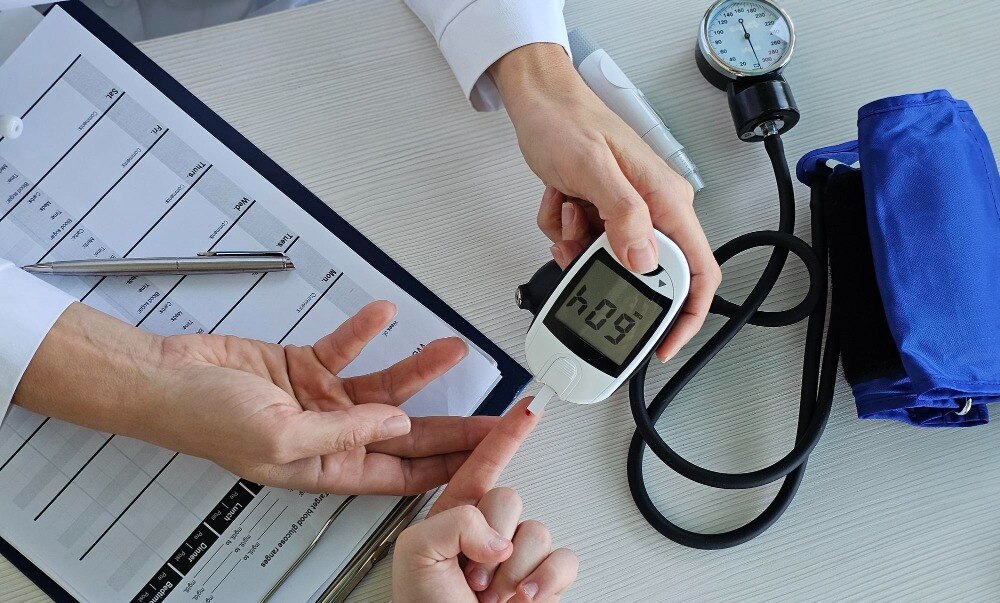
Choosing a clinician for diabetes, high blood pressure, or both involves more than finding the nearest appointment. You need to match the doctor’s expertise to your condition, bring reliable home measurements, and confirm that consultations cover kidney, eye, foot, heart, and medication risks—not only isolated glucose or blood-pressure values.
Key takeaways
- Start with a general physician for new symptoms or one abnormal reading.
- Confirm hypertension using correctly measured readings on two occasions.
- Track home blood pressure, glucose, weight, medicines, and symptoms.
- Ask about HbA1c, kidney function, cholesterol, and cardiovascular risk.
Which type of doctor should you consult for diabetes or hypertension?
Start with a general physician if you have new symptoms, one abnormal glucose result, or one high blood-pressure reading. A single borderline glucose result does not diagnose diabetes, and hypertension usually requires the average of at least two correctly measured readings on two occasions, confirmed with home or ambulatory monitoring when feasible.
| Option | What it means | When it applies |
|---|---|---|
| General physician | Provides initial assessment, diagnosis, prescriptions, and routine follow-up | New symptoms, early or uncomplicated diabetes, raised blood pressure, or coordination of referrals |
| Diabetologist | Focuses on diabetes medicines, glucose patterns, and complication prevention | Confirmed diabetes needing treatment adjustment, frequent highs or lows, or difficult-to-control HbA1c |
| Endocrinologist | Treats diabetes plus complex hormone and metabolic disorders | Type 1 diabetes, recurrent hypoglycaemia, thyroid or adrenal disease, pregnancy-related complexity, or unclear diagnosis; search for an endocrinologist near me when these issues overlap |
| Cardiologist | Evaluates the heart and blood vessels | Chest pain, breathlessness with exertion, palpitations, prior heart attack or stroke, heart failure, or hypertension that remains high despite several medicines |
For confirmed but stable type 2 diabetes or hypertension, a capable general physician can provide continuing care and arrange kidney, cholesterol, eye, and foot checks. Choose a diabetologist when glucose management is the main problem; choose a cardiologist when cardiovascular disease or symptoms dominate.
Online searches for the best diabetes doctor near me or the best hypertension doctor near me should guide comparison, not replace checking the doctor’s scope of practice.
What should you check before choosing a doctor near you?
Check a doctor’s registration, formal training, doctor experience, and scope of practice before you book. In India, verify an active registration with the National Medical Commission or the relevant State Medical Council. Diabetes doctor qualifications may include MBBS with MD or DNB in General Medicine, while DM or DNB in Endocrinology indicates advanced specialist training.
“Diabetologist” is not a single legally uniform qualification, so ask what training supports the title.
| Option | What to verify | Scope of practice |
|---|---|---|
| General physician | Recognised medical degree, registration, and experience with chronic disease | Diagnosis, prescriptions, monitoring, prevention, and referral |
| Diabetologist or endocrinologist | Diabetes doctor qualifications, specialist training, and complication-management experience | Glucose-lowering treatment, thyroid and hormone disorders, kidney-risk review, and referrals |
| Hypertension specialist | Cardiology, nephrology, or internal-medicine training plus relevant doctor experience | Confirming hypertension, assessing cardiovascular and kidney risk, and investigating difficult-to-control blood pressure |
- How many patients with diabetes, hypertension, or both do you manage regularly?
- Will you review HbA1c, estimated glomerular filtration rate, urine albumin-to-creatinine ratio, cholesterol, weight, smoking, activity, and every medication?
- Can you investigate resistant hypertension, including missed doses, incorrect measurement, NSAIDs, decongestants, sleep apnea, kidney disease, and primary aldosteronism?
- Which symptoms or test results would prompt referral to an endocrinologist, cardiologist, nephrologist, eye specialist, or foot-care professional?
Choose a doctor who explains targets according to your age, kidney function, frailty, symptoms, and treatment burden—not one who treats “lower” as automatically better.
How often should you consult, and what should you measure at home?
The answer to how often to see a diabetes doctor depends on control: book reviews about every three months when treatment changes, glucose remains above target, or HbA1c needs improvement; six-month reviews may suit stable diabetes.
Ask how often to see a hypertension doctor based on readings: review within weeks during medication changes or uncontrolled pressure, then every three to six months once stable.
For each appointment, bring a dated record rather than isolated numbers:
- Home blood sugar monitoring: record fasting glucose before breakfast and glucose two hours after a meal on the days your clinician specifies. Add the meal timing, medicines, missed doses, exercise, and symptoms.
- Home blood pressure monitoring: use a validated upper-arm cuff of the correct size. Rest quietly for five minutes, support your back, keep both feet flat, place the arm at heart level, and do not talk.
- Take two blood-pressure readings one minute apart in the morning and evening for at least three days, preferably seven. Record both; your clinician can calculate an average, often excluding the first day.
A single high office reading does not establish hypertension. Confirmation with home or 24-hour ambulatory monitoring helps identify white-coat or masked hypertension. Do not change medication from a reading or symptom alone.
Bring your monitor to an appointment for technique and accuracy checks, and seek urgent care for severe pressure with chest pain, breathlessness, weakness, confusion, or vision loss.
Which tests reveal long-term risk beyond one glucose or blood-pressure reading?
One reading cannot show whether diabetes or hypertension is quietly damaging organs. HbA1c meaning is your average blood-glucose exposure over roughly two to three months; compare it with fasting glucose and post-meal glucose to identify persistent elevation or large spikes. Blood-pressure readings add context, but organ checks reveal consequences.
| Test | What it reveals | What prompts review |
|---|---|---|
| HbA1c, fasting glucose, post-meal glucose | Average control, baseline levels, and after-meal rises | Repeatedly high or widely variable results |
| Kidney function test for diabetes | Estimated glomerular filtration rate (eGFR), showing how well the kidneys filter blood | Falling eGFR or a sudden change |
| Urine albumin-to-creatinine ratio | Albumin leakage, an early sign of kidney injury from diabetes or hypertension | A raised or rising result |
| Cholesterol | LDL and triglycerides that contribute to heart attack and stroke risk | High LDL, high triglycerides, or low HDL |
| Weight and waist measurement | Insulin resistance and changing cardiovascular risk | Steady gain or increasing waist size |
| Eye examination | Retinal blood-vessel damage from diabetes or high blood pressure | New bleeding, swelling, or vision change |
| Foot examination | Reduced sensation, poor circulation, cracks, and ulcers | Numbness, colour change, wounds, or infection |
For type 2 diabetes, eGFR and urine albumin-to-creatinine ratio are generally checked at least yearly. The pattern matters: worsening albumin leakage, kidney function, cholesterol, weight, eye findings, or foot sensation can require treatment changes even when glucose appears acceptable.
When does a local doctor need to adjust treatment or refer you onward?
A local doctor should adjust treatment or refer you onward when readings, symptoms, or test results show that the current plan is unsafe, ineffective, or beyond primary-care scope. Use patterns—not one abnormal reading—and keep prescriptions, reports, and referral notes together.
- Identify treatment harm: confusion, sweating, tremor, fainting, or repeated falls can signal hypoglycaemia or orthostatic hypotension. Review dose timing, kidney function, and standing blood pressure before tightening targets; below 130/80 mm Hg is unsafe if it causes dizziness or falls.
- Investigate resistant hypertension before adding medicines indefinitely. Confirm cuff size and measurement technique, check adherence, sodium and alcohol intake, and review NSAIDs, decongestants, and other interacting drugs. Persistent elevation despite three medicines, including a diuretic, warrants assessment for kidney disease, primary aldosteronism, sleep apnoea, or renal-artery disease.
- Conduct a diabetes medication review when kidney function changes, hypoglycaemia recurs, or heart failure, atherosclerotic cardiovascular disease, or chronic kidney disease affects drug selection. SGLT2 inhibitors and GLP-1 receptor agonists are options for suitable patients with these risks, even without a need for further A1C reduction.
- Refer to a nephrologist, cardiologist, endocrinologist, or eye specialist when diabetes and hypertension complications progress, kidney tests worsen, cardiovascular symptoms appear, control remains unexplained, or examination needs exceed local services.
Swasthya Clinic Holistic Healing can coordinate repeated reviews, test tracking, and a clear specialist handoff close to home. Bring home readings, medicine strips, supplements, and recent reports to each appointment.
Related service
Diabetes & Hypertension Diabetes & High Blood Pressure Treatment in Ravet, Pune Managing diabetes and high blood pressure requires regular monitoring, medical guidance, and... View service → |
Frequently asked questions
Which type of doctor should you consult for diabetes or hypertension?
Start with a general physician for new symptoms, one abnormal glucose result, or one high blood-pressure reading. They can diagnose, begin treatment, and refer you to an endocrinologist, cardiologist, nephrologist, or other specialist when needed.
What should you check before choosing a doctor near you?
Check the doctor’s qualifications, experience managing diabetes and hypertension, access to recommended tests, follow-up process, emergency guidance, consultation availability, and distance from your home.
How often should you consult, and what should you measure at home?
Your follow-up schedule depends on control, treatment changes, and complications. Record home blood-pressure readings, glucose results when prescribed, weight, medicines, symptoms, and missed doses.
Which tests reveal long-term risk beyond one glucose or blood-pressure reading?
Ask about HbA1c, fasting glucose when appropriate, urine albumin-to-creatinine ratio, creatinine and estimated glomerular filtration rate, lipid profile, eye examination, and cardiovascular risk assessment.
When does a local doctor need to adjust treatment or refer you onward?
Treatment needs review when readings remain above target, side effects occur, medicines are missed because of cost or complexity, complications appear, or diagnosis is uncertain. Referral is appropriate for difficult control, organ damage, pregnancy, or suspected emergencies.
Keywords