Breathing symptoms deserve more than repeated short-term treatment when they last for weeks, return in episodes, or interfere with walking, sleeping, or work. You will be able to separate emergencies from appointment-level concerns, choose the right clinician, and prepare information that makes the first evaluation more useful.
Key takeaways
- Seek emergency care for severe breathlessness or trouble speaking full sentences.
- Book a pulmonologist appointment for persistent, worsening, or unexplained breathing symptoms.
- Bring symptom timing, medication details, test results, and exposure history.
- Ask what each test will show and when you will receive the results.
When breathing symptoms need emergency care instead of an appointment
Seek emergency evaluation now for severe breathlessness at rest, rapidly worsening breathing problems, or difficulty breathing that prevents you from speaking in full sentences. Do not wait to search for a pulmonologist near me or schedule a routine visit.
Go to an emergency department or call emergency services if you have:
- Blue or grey lips
- New confusion
- Fainting
- Severe or crushing chest pain
- Coughing up a large amount of blood
- Any coughing of blood accompanied by breathing difficulty, weakness, or faintness
Coughing up any blood needs prompt clinical assessment, even when the amount is small and the cough has lasted only briefly. Blood with breathlessness or faintness is an emergency because it can signal serious bleeding, a clot, infection, or another urgent condition.
Do not let a pulse-oximeter number overrule alarming symptoms. Poor circulation, cold fingers, movement, nail products, skin pigmentation, and device limitations can produce an inaccurate reading. Sit still, warm your hand, repeat the measurement, and seek help based on your symptoms rather than relying on one number.
A reassuring reading does not make severe breathlessness, blue or grey lips, confusion, fainting, or chest pain safe to manage at home.
The symptoms and time limits that justify a pulmonologist appointment
Arrange a medical evaluation if breathlessness lasts about a month, symptoms continue for more than three weeks without improvement, or normal activity becomes harder. Book a pulmonologist when a persistent cough lasts beyond eight weeks, episodes keep returning, or basic evaluation leaves the cause unexplained.
| Pattern | Possible clue | Appropriate next step |
|---|---|---|
| Nighttime cough, wheezing and noisy breathing during sleep | Asthma or obstructive sleep apnea, especially with witnessed pauses, gasping, or daytime sleepiness | General physician or pulmonologist; ask about a sleep study |
| Exertional breathlessness | Lung disease, anemia, heart disease, medication effects, or deconditioning | Initial examination; seek cardiology assessment for chest pressure, palpitations, leg swelling, or fainting |
| Recurring chest infections | Bronchiectasis or another underlying lung problem | Pulmonologist assessment |
| Symptoms linked to work, mold, dust, fumes, animals, or hobbies | Occupational or environmental asthma | General physician or allergist; compare symptoms during and away from exposure |
Patterns matter because timing, triggers, recurrence, and activity limits reveal problems that one isolated episode can hide. Note whether symptoms improve away from work or home, and whether infections, fever, sputum, or nighttime awakenings recur.
Start with a general physician for an examination and basic tests. Choose a pulmonologist when lung symptoms persist, recur, remain unexplained, or lung-function results are abnormal. Involve an allergist when exposure-linked allergy or asthma is central; choose cardiology when breathlessness includes cardiac warning symptoms.
What a pulmonologist checks during the first evaluation
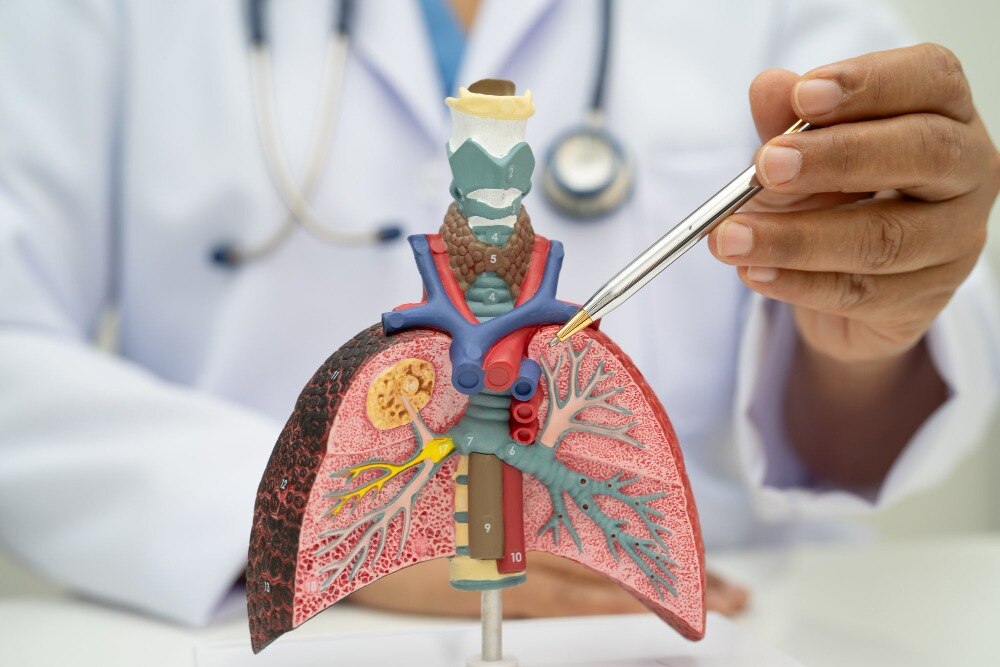
The first visit is a structured search for a cause, not an automatic prescription for a stronger inhaler. Your pulmonologist will map when symptoms began, their triggers, the walking distance before breathlessness, nighttime awakenings, fever, sputum colour, smoking or vaping, household smoke, workplace dust or chemicals, mold, animals, allergies, medicines, inhaler technique, and prior infections.
1. The examination may include pulse oximetry, respiratory rate, a chest examination, and review of earlier reports. Bring previous X-rays, CT reports, discharge summaries, and lung-function results if you have them.
2. Spirometry with bronchodilator testing measures airflow and checks whether it improves after medicine. Peak-flow measurement records airflow over time and can reveal variable obstruction, including a work-related pattern. Normal spirometry on a symptom-free day does not exclude asthma.
3. A chest X-ray looks for infection, structural change, or another visible cause. A high-resolution CT scan gives finer detail when bronchiectasis or interstitial lung disease is suspected.
4. A complete blood count can identify anaemia or inflammatory patterns. Sputum testing examines infection when phlegm is relevant, while an echocardiogram may be considered if heart disease or pulmonary hypertension is suspected.
5. COPD requires post-bronchodilator spirometry with an FEV1/FVC ratio below 0.70. If symptoms persist despite normal initial tests, repeat testing, full pulmonary function tests, diffusion-capacity testing, or alternative-diagnosis testing may follow.
How to prepare so the appointment answers the right question
Bring these items so the visit can answer a specific clinical question:
1. Pack a medication list and inhalers: include each medicine’s dose and schedule, and bring every inhaler. Add prior X-ray or CT reports and images, discharge summaries, vaccination history, allergy information, and earlier oxygen readings.
2. If symptoms are stable enough to wait, keep a symptom diary for one to two weeks. Record the date and time of breathlessness, triggering activity, walking distance before stopping, nighttime awakenings, wheezing, fever, sputum colour, and exposure to smoking, mold, dust, fumes, or other workplace exposure.
Note whether symptoms improve away from work or home.
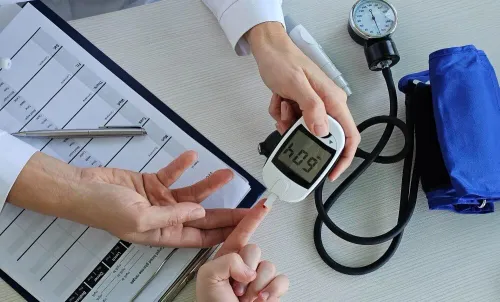
3. If you use a pulse oximeter, rest for several minutes, warm your finger, remove nail products, keep still, and wait for a stable number. Record the oxygen reading beside your symptoms and activity; do not start or stop oxygen based on one number.
4. Take serial peak-flow readings at work and away from work when exposure-related symptoms are suspected. The difference can reveal an occupational asthma pattern.
Recurring symptoms despite a correctly used inhaler need more than a higher dose. Ask for a review of inhaler technique, adherence, triggers, diagnosis, and complications.
How to choose a nearby service and decide what happens next
Before booking a pulmonologist near me, call the service and ask what happens beyond the consultation. Confirm that it can review existing X-rays or CT images, perform or arrange spirometry, assess oxygenation, coordinate cardiac testing or a sleep study referral, and provide follow-up if the cause remains unclear.
| Service check | Ask for | Why it matters |
|---|---|---|
| Imaging review | Bring reports and image files | Prevents unnecessary repeat scans |
| Lung testing | Spirometry on-site or through a partner | Measures airflow and treatment response |
| Oxygen assessment | Pulse oximetry at rest and with activity | Finds exertional desaturation |
| Coordination | Cardiac or sleep evaluation | Breathlessness and nighttime gasping can have non-lung causes |
| Follow-up | A review plan after results | Unexplained symptoms need a next step |
A local multispecialty clinic is practical when you need respiratory assessment alongside general medical or orthopedic care. In Ravet, Pune, Swasthya Clinic Holistic Healing can provide an initial respiratory evaluation in Ravet Pune and guide further testing or referral; sudden severe symptoms belong in an emergency department.
After the first visit:
- Persistent exertional breathlessness may lead to full pulmonary function tests, diffusion capacity testing, high-resolution CT, exercise testing, or cardiopulmonary exercise testing.
- Nighttime gasping may lead to a sleep study.
- Suitable people with chronic respiratory disease may be assessed for pulmonary rehabilitation, combining supervised exercise, education, and behaviour change—not only for people using oxygen.
Book promptly when symptoms persist, recur, or limit activity. Escalate immediately when danger signs appear.
Related services
General Pulmonology in Ravet Expert Respiratory Care for Healthy Lungs At Swasthya Clinic, Ravet, Expert Respiratory Care for Healthy Lungs At Swasthya Clinic, Ravet, we provide comprehensive diagnosis and treatment for lung and respiratory... View service → |
Chest & Respiratory Care Our doctor provides comprehensive diagnosis and treatment for a wide range of chest and respiratory conditions. View service → |
Frequently asked questions
When should breathing problems receive emergency care instead of a pulmonologist appointment?
Seek emergency evaluation for severe breathlessness at rest, rapidly worsening breathing, or difficulty speaking in full sentences. Do not wait for a routine appointment.
How long should breathing symptoms persist before you see a pulmonologist?
Arrange a pulmonologist appointment when symptoms persist, recur, worsen, or remain unexplained, especially when they interfere with walking, sleep, work, or daily activities.
What happens during a first pulmonologist evaluation?
The pulmonologist reviews your symptoms, medical and exposure history, medicines, and previous reports, then examines your breathing. They may recommend tests such as spirometry, chest imaging, or oxygen-level measurement.
How should you prepare for a pulmonologist appointment?
Record when symptoms began, what triggers them, nighttime symptoms, smoking or workplace exposures, current medicines, and previous test results. Bring a symptom timeline and your questions.
How do you choose a nearby pulmonology service?
Choose a service that can evaluate your main concern, explain available testing, review prior reports, and provide a clear follow-up plan. Ask where urgent symptoms should be assessed and how results will be communicated.
Related services
COPD Treatment & Management in Ravet, Pune COPD Treatment & Management in Ravet, Pune Chronic Obstructive Pulmonary Disease (COPD) is a long-term lung condition that can cause breathing difficulties, persistent cough, wheezing, and... View service → |
Pulmonary Hypertension Consultation in Ravet, Pune Pulmonary Hypertension Consultation in Ravet, Pune Pulmonary hypertension is a condition involving increased blood pressure in the arteries that carry blood from the heart to the lungs. View service → |
Pleural Disease Treatment in Ravet, Pune Pleural Disease Treatment in Ravet, Pune Pleural diseases affect the pleura, the thin layers of tissue surrounding the lungs. View service → |
Pneumonia Treatment & Lung Infection Care in Ravet, Pune Pneumonia Treatment & Lung Infection Care in Ravet, Pune Pneumonia is a lung infection that can cause fever, cough, chest pain, fatigue, and shortness of breath. View service → |
Keywords